
A Complete Retail Roofing Guide for Store Owners
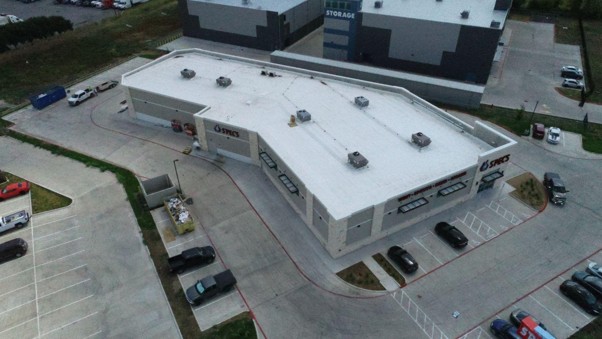
The roof protecting the structural envelope of your retail establishment is one of the hardest-working operational assets on your balance sheet. Aside from keeping the rain out, retail roofing also protects everything critical to your bottom line: your customers, your stock, your store interior, and your ability to keep trading when the weather turns bad.
Better retail business roof installation systems deliver predictable, automated control over safety and even energy use, and repair costs. Advanced diagnostics, such as drone inspections along with predictive monitoring infrastructure, such as thermal imaging leak sensors, now make it much easier to catch problems earlier and avoid more expensive damage later. The key is to work with a retail shopping center roofing contractor that uses data-driven facility management tools.
Why does roofing performance matter for retail stores?
If water breaks through your roofing membrane, you have to deal with a chain reaction of real-time headaches on your sales floor:
- A small leak above the sales floor can create a slip hazard within minutes and quickly turn into an insurance claim or legal issue.
- Water can ruin merchandise and damage your flooring, not to mention destroy custom store fixtures. It can also affect digital displays and point-of-sale systems.
That’s why it’s best to work with roofing companies in Waco, TX that have experience in retail business roof installation, which is very different from residential housing projects and steep roofs. What you need is a commercial roofing contractor that knows how to manage flat, large-acreage structures and can execute the job quietly without forcing your store to close down.
What are the latest retail roofing technology trends in 2026?
Roofing contractors are using new tools to make their assessments more precise and see what standard visual checks can’t detect.
- Drone surveys allow a retail shopping center roofing contractor to inspect large roof areas quickly and safely. High-resolution images analyzed with AI can instantly show any cracks and blistering, along with loose flashing and other early signs of damage.
- Thermal imaging is now becoming the standard in finding hidden moisture. You see, water may already be collecting inside the insulation long before you see a drip inside the store. Thermal cameras can detect temperature differences that point to trapped moisture under the membrane, so your roofer can target a specific section instead of recommending unnecessary large-scale replacement.
- Leak detection sensors can be placed under the roof membrane or near rooftop equipment so that your team can receive an alert before the damage spreads to inventory or checkout areas.
- Predictive maintenance software may also be extremely useful if you manage several retail locations. It can analyze inspection records against sensor data and weather exposure to estimate when roof components might need inspections and maintenance, so you can plan repairs around your budget and store schedule.
How does modern roofing installation reduce business disruption?
Roof work that’s been poorly planned can disrupt your retail store’s operations and cause you to lose serious revenue. The good news is that contractors experienced in retail business roof installation know how to isolate the work zone and stage equipment out of sight so that your customers can safely park and enter the store without even realizing construction is happening, and your staff can run their shifts exactly like any other business day.
- They might use wide-roll single-ply membranes to cover larger areas with fewer seams and use those along with pre-made edge components to reduce on-site labor.
- Instead of opening a large roof area at once, the contractor can work in defined sections. Each section can be removed, replaced, and sealed before the next one begins.
- Heavy work should happen outside peak trading periods whenever possible to keep noise and odor at a minimum. Your retail shopping center roofing contractor might use low-VOC cold-applied adhesives, which don’t produce the harsh chemical fumes and strong smells associated with hot asphalt methods.
- Safety planning is also done before materials even arrive. Your roofing contractor will install heavy-duty scaffolding tunnels to cover your walkways and use debris netting to catch any loose materials.
- Crane lifts and overhead hoisting (especially near entrances or customer parking areas) should be done outside busy operating hours.
What are the best preventive roof maintenance strategies for retail stores?
- Schedule professional inspections at least twice a year, once in early spring and again before fall. These two times of year are the best windows for maintenance because they let you find damage after harsh weather and prepare the roof for the next season.
- Be ready for severe weather. Before winter, confirm snow-removal plans and check areas where ice may build up. And before high-wind seasons, secure loose panels and inspect rooftop equipment for puncture risks.
- Regularly clean your roof’s drains, scuppers, or gutters. Any ponding water adds weight and wears out the membrane.
- Ask your contractor which coating handles the intense Central Texas heat best. Reflective elastomeric or silicone coatings can protect the membrane from UV damage and reduce heat absorption. It might be a good idea to touch up worn areas to help the coating keep doing its job.
- It’s also prudent to have an emergency repair. Ask your roofer if your service agreement can give you priority response when water intrusion threatens your store. That plan should name the access points along with material staging areas so that crews can act quickly when every hour matters.
What are the most energy-efficient roofing systems for commercial retail buildings?
- Large retail roofs absorb massive amounts of heat during long summer trading hours. Choosing a system that lowers heat transfer reduces the strain on your AC units and cuts down your utility bills.
- Cool roof membranes (TPO and PVC) feature highly reflective white surfaces that bounce sunlight away from the building. They need to be paired with heat-welded seams to make waterproofing reliable.
- Reflective coatings (elastomeric or silicone coating) on an existing roof can boost UV protection and decrease heat absorption.
- Using thick polyose boards beneath the membrane can also help keep conditioned air inside the building and lower your total HVAC electricity use.
- If you are planning to install solar panels down the line, let your contractor know during a re-roofing project. They can upgrade the membrane thickness and secure manufacturer approvals for the structure and the warranty so that your roof can handle the retrofits later.
Upgrade your retail roofing system for long-term protection.
Contact Clark Roofing to plan a safe and more efficient roofing system for your retail property.