
TPO vs EPDM Roofing: Which Commercial Roofing Option Performs Best in Central Texas?
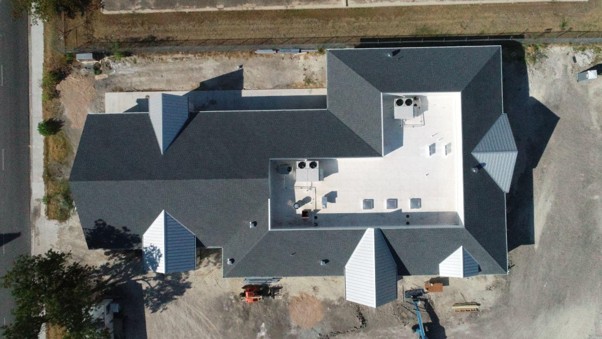
The right roofing system can protect your property from all kinds of weather and even reduce your maintenance costs year after year. As you explore the options, you will likely come across TPO vs EPDM for flat and low-slope commercial roofs.
Many commercial property owners trust these roofing systems, but it’s important to know the difference between EPDM and TPO to ensure that you’re choosing the right solution for your building. After all, they have different strengths that depend on your building’s needs and the weather in your area.
What is TPO roofing?
TPO, or Thermoplastic Polyolefin, is a single-ply roofing membrane that you will usually find on flat and low-slope commercial buildings. It’s designed to provide durable, weather-resistant protection while remaining lightweight and relatively easy to install.
When you choose TPO vs EPDM roofing, your building can benefit from its white, reflective surface that reflects large amounts of heat off your property instead of absorbing it. This can help keep indoor temperatures more comfortable and reduce the workload on your cooling system during Central Texas’ hot summers, which may lead to lower energy costs.
Because of its durability and energy-efficient properties, TPO has become a popular roofing choice for a wide range of commercial properties, from offices and warehouses to retail buildings and schools.
What is EPDM roofing?
With Ethylene Propylene Diene Monomer (EPDM), you get a synthetic rubber roofing membrane that’s known for its durability and flexibility for flat and low-slope roofs.
You’ll typically find EPDM is commonly installed on various commercial properties, including industrial facilities and schools. Because it’s made from rubber, the membrane can expand and contract with changing temperatures. This allows your commercial roof to perform well throughout the year.
TPO vs EPDM roofing: key differences
| Feature | TPO roofing | EPDM roofing |
| Material | Thermoplastic Polyolefin single-ply membrane | Ethylene Propylene Diene Monomer synthetic rubber membrane |
| Appearance | Typically, white with a reflective surface | Usually black, with white versions also available |
| Energy efficiency | Reflects sunlight to help reduce heat absorption and cooling costs | Black membranes absorb more heat, while white EPDM offers improved reflectivity |
| Heat performance | Performs well in hot climates because of its reflective surface | Handles temperature changes well, but black EPDM absorbs more solar heat |
| Durability | Resistant to UV exposure as well as punctures and tears | Highly durable, thanks to its flexibility and resistance to weathering |
| Flexibility | Strong and durable but generally less flexible than EPDM | Excellent flexibility that makes it well-suited to changing temperatures |
| Installation | Heat-welded seams create a strong, watertight bond | Depending on your roofing system, it may be installed using adhesive or mechanical fasteners, or even ballast. |
| Maintenance | You’ll need to schedule periodic commercial roof inspections to check seams and flashing | Also benefits from routine inspections, with repairs often being straightforward |
| Typical lifespan | With proper installation and regular maintenance, it could last around 20 to 30 years | Proper care can make EPDM roofs last around 25 to 30 years and possibly more |
| Best suited for | Commercial buildings where your main priorities are energy efficiency and heat management | Commercial buildings that need a durable, flexible roofing membrane |
How TPO and EPDM perform in Central Texas weather
Extreme summer heat
TPO’s white reflective surface can help bounce heat away instead of absorbing it, which can make it easier to keep your building cool and may even help lower your cooling costs. EPDM’s traditional black membrane absorbs more heat, so the roof tends to get hotter during the summer.
Severe storms and heavy rain
Between TPO and EPDM, both are winners when it comes to providing reliable protection against heavy rain when they’re installed correctly. TPO uses heat-welded seams to give your building a strong, watertight barrier, while EPDM relies on adhesive or seam tape to keep water out. No matter your roofing system, be sure to schedule regular inspections and maintenance to ensure that the seams remain secure and continue protecting the building.
Hail and weather events
Both TPO and EPDM can withstand hail and extreme weather events. However, their performance ultimately depends on the membrane’s thickness and the quality of the installation. Regular maintenance also matters. After a major storm, it’s always a good idea to call a commercial roofing contractor to identify and repair any storm roof damage before it leads to leaks or more extensive problems.
Cost comparison: TPO vs EPDM roofing
| Cost factor | TPO roofing | EPDM roofing |
| Initial installation costs | Installation costs are generally competitive, although pricing varies depending on the size of your roof, along with the membrane thickness and installation requirements. | The cost to install an EPDM roof is similar or slightly lower, depending on your roofing system and installation method. |
| Long-term maintenance expenses | Requires routine inspections to ensure that the seams and flashing remain in good condition. Proper maintenance helps maximize your commercial roof’s lifespan. | Also benefits from regular inspections, with repairs often being straightforward because of the membrane’s flexible rubber material. |
| Energy savings potential | Its reflective white surface helps reduce heat absorption, which may lower your building’s cooling costs during Central Texas’ hot summers. | Traditional black EPDM absorbs more heat, so it typically doesn’t offer the same cooling benefits as white TPO. White EPDM can provide improved energy efficiency. |
| Overall ROI | When you want long-term durability while reducing energy consumption in hot climates. | Excellent long-term value through its flexibility and long service life.
|
Which commercial buildings benefit most from TPO or EPDM?
Consider TPO roofing for:
- Office buildings with high cooling demands (to help reduce heat absorption)
- Retail centers that require maximum energy efficiency to lower utility bills
- Educational facilities looking for cost-effective roofing solutions
Meanwhile, EPDM may be the better fit for:
- Warehouses that need dependable protection for large warehouse roofs
- Manufacturing facilities needing durable rubber membranes
- Large industrial buildings with expansive and low-slope roofs
- Budget-conscious property owners who want a dependable, long-lasting roofing solution at a competitive price/lower upfront costs
Factors to consider before choosing a commercial roof
Before deciding between TPO vs EPDM, think about how your building is used and what you expect from your roofing system over the long term.
- Building size – Larger buildings may benefit from roofing systems that can be installed efficiently while providing dependable protection across a wide surface area.
- Energy goals – If reducing cooling costs is one of your priorities, a reflective roofing system like TPO may help improve your building’s energy efficiency.
- Budget – Consider both the initial installation cost and the long-term value. A lower upfront price may not always result in the lowest lifetime cost.
- Roof traffic – If your roof regularly accommodates maintenance crews or HVAC technicians, you’ll want a roofing system that can handle frequent foot traffic without excessive wear.
- Local climate – Think about the weather your roof has to handle every year. In Central Texas, that means intense summer heat and heavy rain, along with strong winds and the occasional hailstorm. Choosing a roofing system that’s built for these conditions can help it last longer and perform better over time.
- Long-term ownership plans – A durable roof with lower maintenance needs can help you save money and avoid unexpected repairs down the road.
Also Read: TPO Roofing’s Features and Installation Procedures
Why choose professional installation?
Even the best roofing system won’t perform as expected if it isn’t installed correctly. Proper installation will always impact how well your roof stands up to Central Texas weather and how long it lasts, no matter which roof you choose.
If you’re planning a commercial roof replacement, the Clark Roofing team can assess your building and explain the difference between TPO and EPDM, so you can choose the right roofing system that fits. Contact us to schedule a professional roof assessment and get expert guidance for your Central Texas commercial property.